
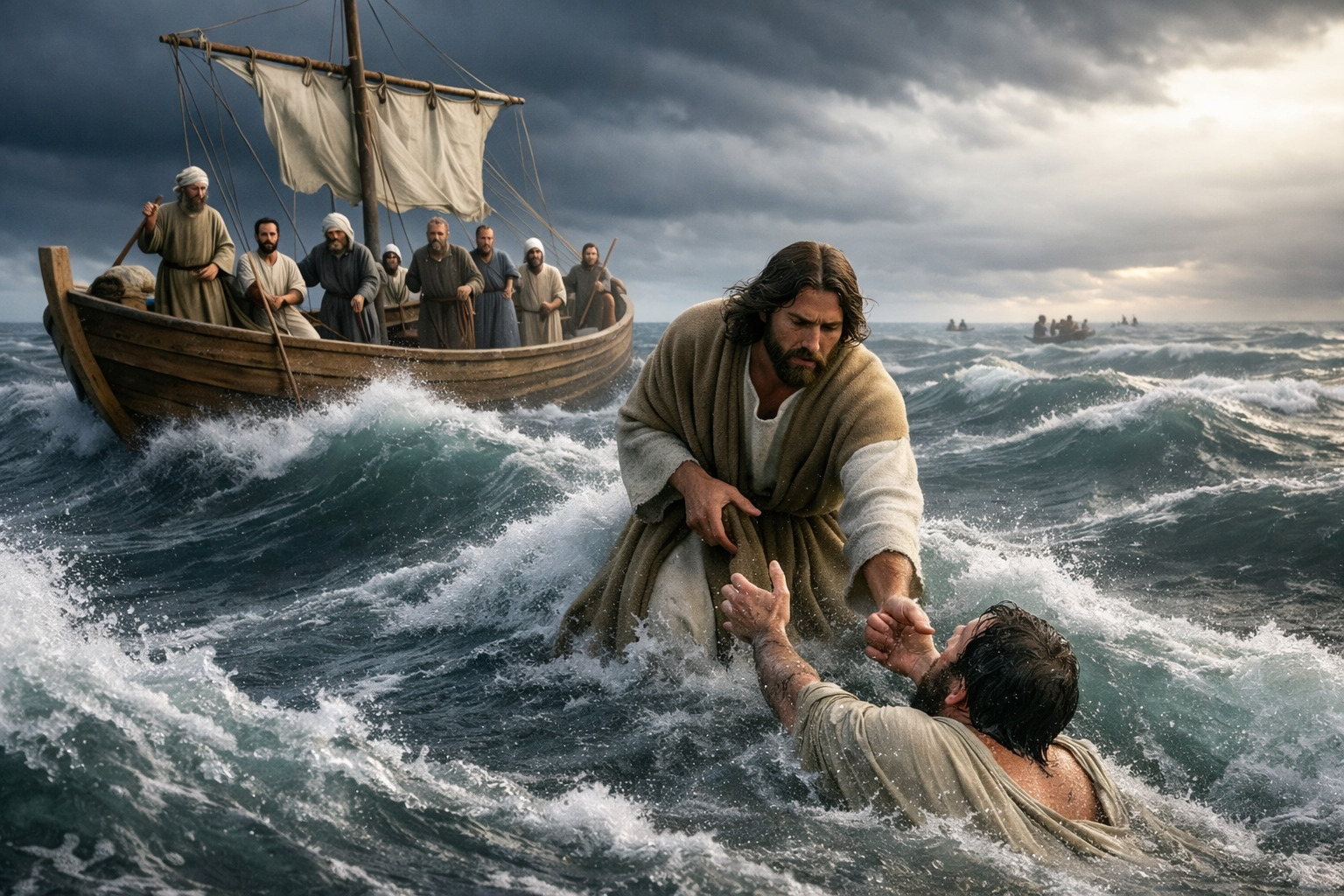
Living by faith is not believing that things will work out.
It is choosing obedience when they don’t.
Faith is often reduced to confidence in outcomes; prayers answered, doors opened, clarity given. Scripture never defines it that way. Faith is trust expressed through action when understanding runs out and God does not explain Himself. It is not optimism. It is surrender.
You can believe in God and still reserve authority for yourself. You can confess faith while protecting the reflexes, appetites, and reactions that feel justified. That is why living by faith is so disruptive. It is not additive. It is subtractive. Something in you must lose its grip.
“The righteous shall live by faith.” (Romans 1:17)
That verse is not inspirational. It is diagnostic. It describes how life is lived, not how it feels.
Faith Begins Where Self-Rule Is Exposed
You do not learn to live by faith in moments of peace.
You learn it when you are provoked.
Faith begins at the point where something rises up in you; anger, urgency, entitlement, fear — and demands expression. In those moments, the question is not whether your reaction is understandable. The question is who is ruling.
Most people do not abandon faith intellectually. They abandon it practically by choosing immediacy over obedience, relief over restraint, expression over surrender.
“Trust in the Lord with all your heart, and do not lean on your own understanding.” (Proverbs 3:5–6)
Leaning on your own understanding is not about ignorance. It is about justification. It is the instinct to baptize reaction as righteousness. Faith interrupts that instinct. It forces a pause. It demands allegiance when restraint feels unnatural.
Prayer Is Where Impulses Are Brought to the Light
Prayer is not where you convince God.
It is where you are confronted.
Real prayer does not always calm you. Often it exposes what is actually driving you. That is why Christ removed the audience and insisted on secrecy.
“When you pray, go into your room and shut the door…” (Matthew 6:6)
Prayer strips away performance and leaves you alone with your motives. It reveals the places where you want God’s endorsement without His authority.
“Pray without ceasing” does not mean constant speech. It means refusing to act independently. It means recognizing the surge before it speaks — and bringing it under Christ’s rule before it becomes action.
This is where faith becomes tangible. Not in grand decisions, but in the split second where you either surrender the impulse — or obey it.
Faith Is Not Negotiating Outcomes
One of the most subtle distortions of faith is the belief that belief itself guarantees a preferred result.
Many people are taught to “pray believing,” but what they practice is praying controlling. They assume faith means trusting God to do what they believe is loving, reasonable, or emotionally necessary. Healing. Protection. Preservation. Relief from loss.
But that is not faith.
That is wishful thinking, often dressed up in Scripture.
When “all things work together for good” is interpreted as my good as I define it, faith quietly becomes a contract. God is expected to preserve what I cannot bear to lose. Disappointment then feels like betrayal, not because God failed, but because He never agreed to the terms.
“You ask and do not receive, because you ask amiss.” (James 4:3)
God does not consult us about His purposes. He does not submit His will to our emotional thresholds. His thoughts are not our thoughts, and His ways are not our ways.
Jesus Himself defined faith correctly in Gethsemane:
“Not my will, but yours, be done.”
That was not resignation.
That was surrender.
Faith is not trusting God to spare you from suffering.
Faith is trusting Him when He doesn’t — believing that His purposes are good even when they are costly, even
when they wound, even when they do not make sense to you.
Anything else is not faith.
It is the old self clinging to control.
Scripture Names What You’re Tempted to Excuse
You cannot live by faith without Scripture — but Scripture will not flatter you.
God’s Word does not exist to affirm your instincts. It exists to expose them. It names the old self you are tempted to protect and reminds you that restraint is not repression — it is obedience.
“Your word is a lamp to my feet and a light to my path.” (Psalm 119:105)
Light does not negotiate. It reveals.
Faith submits to Scripture not when it comforts, but when it contradicts the story you are telling yourself in the moment. It allows truth to interrupt reaction before reaction becomes habit.
Self-Control Is Not Suppression — It Is Surrender
For some, the great struggle of faith is forgiveness.
For others, it is self-mastery.
Living by faith does not standardize sanctification. It exposes the particular places where self still rules. For me, the battle has never been bitterness. It has been intensity, the speed at which emotion rises and demands expression.
Faith, in those moments, looks like recognition.
Not suppression.
Not denial.
Recognition.
Seeing the old man rise.
Naming it.
Refusing to let it speak first.
“We take every thought captive to obey Christ.” (2 Corinthians 10:5)
That is not poetic language. It is moment-by-moment obedience. It is surrendering the right to react, even when reaction feels justified. Faith costs you immediacy. It costs you the relief of release. But it produces something deeper: alignment.
This is where dying to self actually happens.
Gratitude Resists Collapse, Not Pain
Faith does not deny suffering. It refuses collapse.
Gratitude is not pretending things are fine. It is anchoring yourself in God’s character when circumstances tempt you to disengage.
“Give thanks in all circumstances.” (1 Thessalonians 5:18)
Gratitude interrupts despair by re-centering authority. It reminds you that faith is not sustained by emotional stability, but by truth.
Faith Cannot Be Lived in Hiding
You were not meant to live by faith alone.
Isolation feels safer because it allows you to manage appearances and conceal weaknesses. But faith withers in secrecy. It requires exposure, not to shame, but to accountability.
“Iron sharpens iron.” (Proverbs 27:17)
Real fellowship does not applaud performance. It confronts avoidance. It invites honesty. Faith survives where hiding ends.
I withdrew from the church for years because I could not find a community willing to trade appearances for discipleship. That isolation nearly destroyed me. Faith cannot be sustained where self-rule goes unchallenged.
Living by faith requires being known.
Counting the Cost
Jesus never hid the cost of following Him.
“Whoever does not bear his own cross and come after me cannot be my disciple.” (Luke 14:27)
Faith is not entry into a safer life. It is entry into a surrendered one. It will cost you control, immediacy, and the right to justify yourself. What it gives in return is not comfort, but life.
You are welcome here wherever you are. But you must decide whether you are willing to count the cost. Christ does not accept partial surrender. Faith is not pretending anymore.
It is obedience when self wants to rule.
It is restraint when reaction feels deserved.
It is surrender when outcomes are withheld.
And once you see that, you cannot unsee it.