Why Believers Feel Unchanged
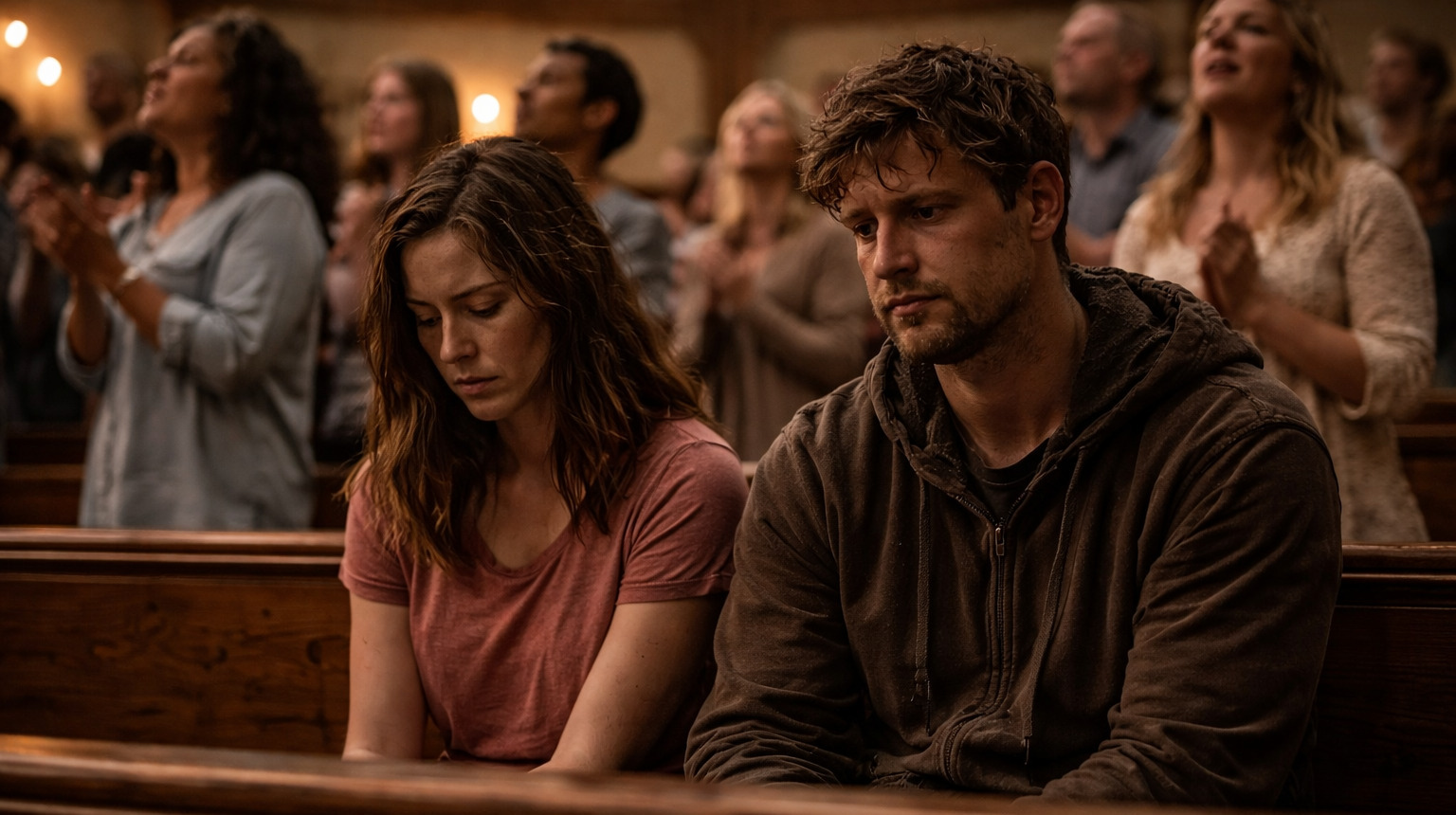
Formation is often misunderstood precisely because it is rarely taught or practiced. Believers who have accepted Christ as Savior are assured they are forgiven, justified, accepted, and secure.
However, without formation questions begin to surface.
Why does obedience feel so exhausting?
Why do I feel like I'm just spinning my wheels?
If I am born again, why can’t I control myself?
For some, this confusion produces striving. For others, discouragement.
For many, it produces a polished form of Christianity—busy, sincere, well-spoken, but inwardly stalled. The language of grace is fluent, yet the life remains largely unchanged.
This confusion is not a sign of rebellion. It is usually a sign that something essential was never explained.
Forgiven, But Still Striving
Scripture never presents forgiveness as God’s final aim. Forgiveness removes guilt. It does not remove the offender. A person can be fully forgiven and still ruled by the old man who must die.
We are taught to believe in Christ, to trust His finished work, to rest in grace. But we are rarely shown how the old man is actually put to death. We are told that confessing faith in Christ makes us new before we have surrendered the old.
So we double down. We strive to resist our urges, behave our way into change, and discipline our way into holiness. And when nothing works, or only works for a season, we assume the failure is ours: a lack of discipline, a lack of self-control, a lack of sustained effort.
“I Am Crucified With Christ”
Paul’s declaration, “I am crucified with Christ,” is often quoted as a spiritual status, as though crucifixion were a poetic way of saying “I’m a Christian now.”
Paul meant something far more severe.
Crucifixion is not a metaphor for sincerity. It is the end of the old man's rule.
When Paul says, “I no longer live,” he is not describing spiritual maturity. He is describing execution. The old man who once governed his desires, reactions, ambitions, and defenses was put to death. Only then did the Spirit raise a cruciform man, able to say, “yet not I, but Christ lives in me.”
The early Church understood what the modern Church has largely forgotten: resurrection life is never received apart from death. Formation does not invent this truth. It names the state, power, and authority in which the apostles walked.
What Formation Actually Is
Formation begins when you stop negotiating and start yielding. It is not intensified effort, but surrendered authority.
This happens when the old man is no longer allowed to set the terms.
Formation cannot take place until the old man has been yielded, confessed, surrendered, and offered up to be stripped for resurrection. It does not begin with effort, insight, or discipline. It begins with death. Until the old man is crucified, the new cannot be raised.
Scripture consistently presents new life as inseparable from death to the old (Romans 6:3–7).
This is why forgiveness alone does not change us. This is why knowledge alone does not free us. This is why discipline alone produces striving instead of life.
Grace forgives instantly. Formation crucifies slowly.
How Did We Lose This?
The early Church did not abandon formation because it ceased to believe the gospel. It surrendered it when it ceased to live as a crucified people. When believers were hunted, despised, and martyred, death to self was not theoretical. Neither was its cost.
But faith shaped by surrender became difficult to sustain once Rome no longer sought to eradicate Christianity, but to absorb it.
What had once formed a yielded people through weakness and humility stood at odds with an ethos centered on strength and honor.
Consequently, the Gospel was not denied, but re-framed. Christ’s substitutionary death was increasingly emphasized as the grounds for justification, while identification with His suffering, death and resurrection receded as a lived pattern of formation due to the closeting of confession.
The Price of Concession
Once state-sanctioned outlaw status was lifted, public confession was relegated to a more socially acceptable and manageable space; the private confessional. Formation, which requires exposure, was thereby converted into a more respectable and dignified religious sacrament.
In that exchange, the Church did not lose its confession. It lost its cross. The public death of the self was no longer required, and formation was reduced to something survivable rather than transformative.
The internal toll of that trade, and the path to reclaiming a crucified identity, is the focus of Step Into the Light and Live. This is not a study of formation, it is an entry into it through the restoration of apostolic confession.