Sanctification is the work God begins the moment He declares a person righteous in Christ. It does not
initiate death to self; it presupposes it. What formation exposes, sanctification works out over time under
the Spirit’s rule.
Sanctification is not advanced by discipline, effort, or religious intensity. The self must be yielded and
surrendered through confession for the Spirit to form and fashion what grace has justified.
If you’re looking for the framework behind this, why slogans don’t change us and why surrender matters, start
with
Formation.
If justification is God’s verdict over our soul, sanctification is His ongoing work of bringing our body,
mind, and habits into alignment with the new heart and new spirit He has already given. It is not
self-improvement or religious performance; it is the Holy Spirit patiently reshaping us into the likeness of
Jesus.
The Spirit is the true agent of sanctification. He convicts, comforts, corrects, and empowers.
Our role is not to “fix ourselves,” but to respond to Him, to say yes when He calls us away
from what grieves Him, and yes when He draws us toward what delights Him. Sanctification is
cooperation with grace, not competition with it.
Five Key Practices for Sanctification
Scripture points to several habits that keep us soft and responsive to the
Spirit’s work. These are not spiritual “steps” or a checklist to impress God.
They are the well-worn paths where He has promised to meet His people and
conform them to the image of His Son.
Sacrifice of a Broken Spirit and Contrite Heart
(Psalm 51:17; Matthew 5:3)
True sanctification always begins with brokenness—the honest admission
that we are spiritually bankrupt on our own.
God does not despise a humble, contrite heart; He draws near to it. The poor in
spirit are the ones who receive the kingdom because they have stopped pretending
they are sufficient.
Public Confession of Chronic Sin
(James 5:16; 1 John 1:9; Matthew 13:24–43)
When sin becomes a pattern, secrecy becomes its shield. Scripture calls us not only
to confess our sins to God, but also to drag them into the light before the Body of
Christ when sin digs in its heels. Jesus’ parable of the wheat and the tares reminds
us that believers and pretenders grow side by side until the harvest; some will
respond with compassion, others with discomfort or even scorn. That exposure is part
of the Cross, not a failure of the process.
This is not penance and it is not “performative holiness.” It is the mortification of
the flesh—allowing the shame of being seen to crucify the old self so its grip is
broken.
Public confession does not erase shame up front; God uses that very shame to kill the
cycle of hidden sin and make room for real, Spirit-born holiness.
Effectual Fervent Prayer of the Righteous
(James 5:16; Acts 12:5; 1 John 5:16)
The Christian walk is personal, but it is never private. Sanctification grows
fastest in the soil of intercession, when believers carry one another’s
burdens, pray through weakness, and stand guard during seasons of temptation.
When confession and prayer meet, grace rushes in. The Spirit often moves most
powerfully through the prayers of those who love us enough to fight for us.
Mind Renewal via Meditation on God’s Word
(Romans 12:2; 2 Timothy 2:15)
The Holy Spirit rewires our thinking through Scripture. As we linger over the
Word, reading, studying, meditating, and letting it expose us, our mind changes.
We stop being shaped by the world’s stories and start being shaped by God’s.
Sanctification accelerates wherever the Word is not merely read, but
meditated upon.
Setting the Heart on Things Above
(2 Corinthians 6:17; Philippians 4:8; 1 Peter 2:11)
A holy life isn’t anti-world, but it is anti-distraction. The issue is
not merely what we give our attention to, but what has already taken hold of our
hearts. The entertainments, habits, and mental clutter around us do more than
occupy our time—they form our affections, teaching us to prefer comfort over
sacrifice, retaliation over mercy, and self-preservation over surrender.
They do not simply distract; they disciple the heart away from God and dull our
desire for Him.
We choose what is pure, lovely, excellent, and worthy of praise, not to earn
favor, but to keep our hearts set on Him.
A Life Shaped by Grace
Sanctification is a lifelong journey. Until we see Christ face to face, there is
always more to lay down and more grace to receive. But as we walk these paths
with honest, yielded hearts, the Holy Spirit faithfully does what we cannot:
He puts to death the old self and forms the life of Jesus within us.
These practices do not sanctify by their observance. They are effective only as the Holy Spirit uses them to
expose and put to death the old self.
Where confession, prayer, or discipline leave the flesh defended or intact, sanctification does not advance.
The Spirit’s work through these means is always ordered toward crucifixion, for without death, no resurrection
follows.
If you want to see what this looks like in a real, imperfect life, the
Pursuing Holiness
blog is where I’ve begun to practice confession in the open, writing honestly
about sin, failure, hard lessons, and the slow work of grace. The
Faith Works
section pairs with it as a place for spiritual studies, epiphanies, and
practical helps for anyone trying to walk this same road.
Revival Revisited
A weary, sin-laden church groans for revival, perpetuating a cycle of drifting, cooling, and hiding our sins
behind polished church smiles. We avoid honesty, put on the pious mask, let our hearts harden, and then, when
everything collapses, we beg God to “send revival” and restore what’s been forfeited due to neglect. But
sanctification depends on yielding to the Spirit, and when we grieve Him through secrecy and pretense, His
work stalls, leaving us trapped in spiritual infancy instead of advancing into maturity.
We are not called to chase spiritual “highs,” but to walk in steady, growing sanctification. There will be dry
seasons and real battles, of course. But the Christian life as God intends it is strengthened through trials,
not weakened by them. It is tempered, not toppled, shaped into endurance rather than pushed into repeated
collapse and desperate revival.
Charles Spurgeon lamented the constant need for revival in his day and wrote:
“It is a sorrowful fact that many who are spiritually alive greatly need reviving. It is
sorrowful because it is proof of the existence of much spiritual evil... Such should be the
constant condition of the sons of God. Feeding and lying down in green pastures and led by
the still waters, they ought not always to be crying, 'my leanness, my leanness, woe unto
me.'... For a church to be ever in need of revival is the indication of much sin, for if it
were sound before the Lord it would remain in the condition into which a revival would uplift
its members. A church should be a camp of soldiers, not a hospital of invalids.”
Revival, Confession, and Power
Spurgeon wasn’t dismissing revival; he was reminding us that its purpose is health,
steadiness, and maturity. A healthy believer continues to grow, learn, and endure,
not collapse again and again. Revival should fortify us for faithful, obedient
service, not usher us back into the same weakness that made it necessary.
And this is where the professing church often reveals its drift. Over time,
confession shifted from a shared discipline in the early church, to a clerical
ritual in the medieval era, to a private, internal practice in much of
Protestantism. As confession moved into the shadows, so did holiness. The outward
appearance of respectability replaced transparency, and the Body ceased to bear
one another’s burdens in the open. The result was predictable: a weakened church,
thin in maturity and anemic in power.
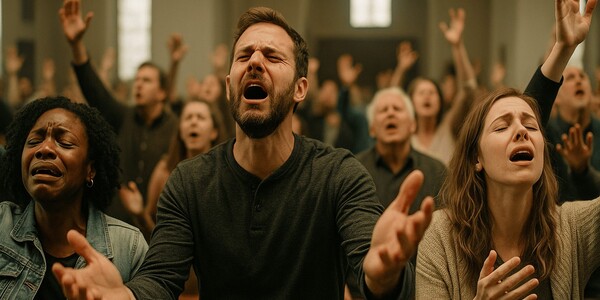
When the early church walked in the light, confessed openly, and bore the shame of
their sins before one another, the power of the Spirit moved freely. Gifts
flourished. Boldness spread. Signs followed those who believed (Mark 16:17–18).
Holiness wasn’t merely taught; it happened. We see this vividly in Acts
19:18–20, public confession leading to purification, spiritual authority, and the
“mighty increase” of the word of the Lord.
But as confession retreated into secrecy (Hebrews 3:13), so did holiness. Instead
of dragging sin into the open where it could die, believers were deceived into
believing they could manage it privately, quietly, and “respectably.” Jesus said
that those who do evil avoid the light, while those who live by the truth
come into the light so that their deeds may be seen (John 3:20–21). And
the result of abandoning His command is precisely what Scripture warns: the Spirit
is quenched (1 Thessalonians 5:19), pride survives (James 4:6), and spiritual
gifts wither. It isn’t that the gifts ceased; it’s that the fertile soil that
once sustained them was choked out by secrecy.
Much of the church became functional cessationists not because the Bible changed,
but because the practice did. You cannot crucify the flesh in private and expect
Pentecost in public. Crosses are not borne in secret; they are borne in the light of
scrutiny, where shame becomes the hammer that nails the old self down. Jesus tied
discipleship to death: “take up your cross.” The apostles tied spiritual power to honesty,
humility, and confession. When the church traded public confession for private
self-management, it traded apostolic power for institutional safety.
If the church exposes her sin to the light, the Refiner’s fire will burn the dross
away and once again form vessels fit for the Master’s use, and in those purified
vessels the Spirit will move with unhindered sanctifying power, just as He did in
the beginning.
Walking in the Light
The truth is not complicated: where believers hide sin, the Spirit grows quiet.
Where believers confess sin, the Spirit moves. Revival does not come through
louder worship, better programs, or more emotional Sundays. It comes the same way
it did in the book of Acts, when God’s people stop pretending, step into the
light, and let the old self die in the presence of God and His people. When
confession, prayer, and obedience converge, James 5:16 becomes reality:
power and spiritual vitality return.
Sanctification, the Cross, and Confession
At its core, sanctification is the long, slow “outworking” of the same cross Jesus
calls us to take up. To be sanctified is to let the Holy Spirit apply the finished
work of Christ to the unfinished parts of our character. That means saying “no” to
the old self, “yes” to the Spirit, and accepting that
dying to self (2 Timothy 2:11–12) is always painful, always humbling, and
never private; it is a form of suffering without which we cannot share in
Christ’s life.
One of the most neglected tools God has given us in this process is honest
confession before others. When we drag chronic sins into the light, we are not
adding works to the cross; we are submitting ourselves to it. Public confession
doesn’t compete with grace; it is grace at work, killing our pride and breaking
the cycle of secret compromise. Together with prayer, Scripture, and separation
from what dulls our affections, confession becomes a powerful catalyst for real,
lasting sanctification.
If you want to explore this more deeply, the page on
Confession unpacks how bringing sin into
the open can move us from endlessly “needing revival” into a steady, growing walk
of holiness.
References:
Spurgeon, C. H. (1882). One Antidote for Many Ills. Metropolitan
Tabernacle Pulpit, Volume 28, Sermon #1673.