
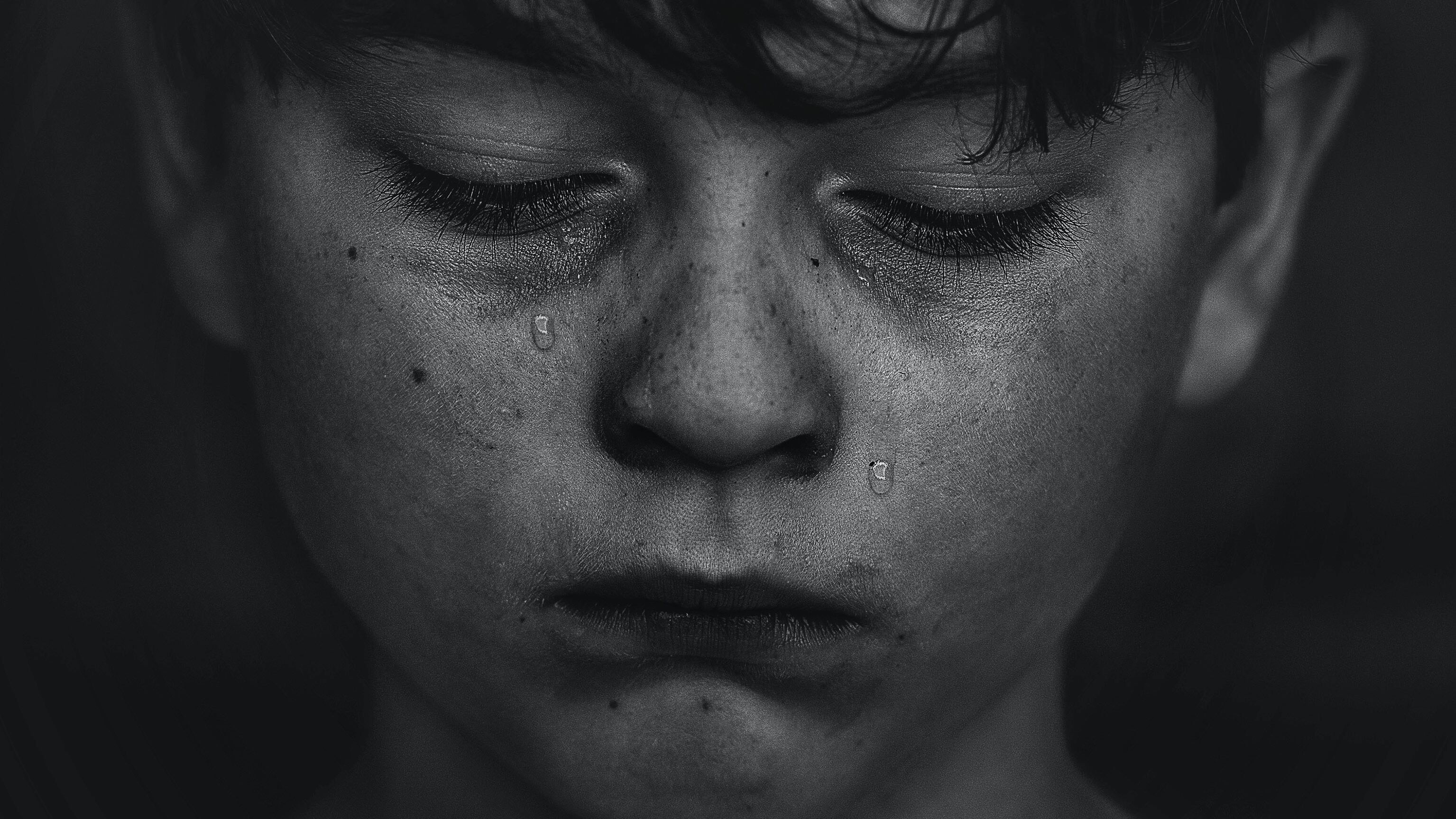
“Blessed be God, even the Father of our Lord Jesus Christ, the Father of mercies, and the God of all comfort; Who comforteth us in all our tribulation, that we may be able to comfort them which are in any trouble, by the comfort wherewith we ourselves are comforted of God.” (2 Corinthians 1:3–4 KJV)
Home Front
I grew up in a house where the fighting never really stopped. It just changed volume.
My parents loved me. They believed in God. They weren’t monsters. But the bickering, the sniping, the tension. It was constant. And the emotional undertow that ran through that house could suck you so far out to sea you felt like you might drown before you got a chance to come up for a gulp of air.
Despite all of that, I honestly thought we were some mix of the Bradys, the Waltons, and the Ingalls. We prayed. We went to church. There were jokes and hugs and birthday cakes and Christmas mornings. And I clung to those scraps of joy like a shipwreck survivor clutching driftwood. Revisiting the memories again and again, like they were the only cow I could milk for emotional sustenance.
Despite this dysfunction, it took me years to realize:
we weren’t the Bradys.
We were closer to the Conners with Bibles on the table.
Night Noise
The arguments didn’t always explode into shouting, but the air was always charged. You learned to read the room like a weather report: how fast the storm might roll in, how bad it might get, whether it was safe to relax for five minutes or not. Nights were the worst. Lying in bed, listening, waiting. Wondering. Bracing.
And then there was the part no one talked about.
I didn’t wake up wet.
I woke up floating.
Night after night, well into my teens. Sheets hung on the line every day like a billboard announcing what nobody
said out loud. Shame doesn’t need help; it narrates itself.
And when the pressure in my head got too loud, I’d thump it against my pillow in a steady rhythm until I fell
asleep from sheer exhaustion. I bent my ear in half and squeezed it till it squeaked, sucked my thumb, did
whatever I could to shift the internal static. Mom would yell from her room, “Scott, stop thumping your head and
squeaking your ear!” but no one ever came and sat on the edge of the bed and asked,
“What are you holding inside that’s so loud you have to beat it into silence?”
They weren’t cruel.
They were overwhelmed.
They loved me. They were just, at any given moment, hurting, distracted, overloaded, and when it came to what I
was going through, either blind, in denial, or asleep. Maybe all three. I don’t know which truth is kinder.
I don’t say that to dishonor them. I say it because this is how trauma usually works: it hides inside “normal.”
The Other Battlefield: School
If home was one front, school was another.
By the time my older brother’s clothes filtered down to me, they weren’t just used—they were from another decade. I walked into school in polyester plaid golf pants loud enough to be seen from orbit, button-down shirts with collars wide enough to cast shade, and Buster Brown church shoes that clicked on the linoleum like Morse code, telegraphing my arrival for the daily emotional beat-down.
The kids would pounce like lions.
“Hey Koehler, you fag, nice shoes!”
“Where are the rest of the clowns? They still packed in that tiny car?!”
It wasn’t just name-calling; it was a slow, daily stripping of dignity. The girls, even as early as fifth grade, knew exactly how to get a reaction and turn it into a joke. They could stir something in me I didn’t understand yet, then point and laugh like I was a freak from a circus sideshow. I wasn’t a boy or a man. I was the Elephant Man—some inhuman thing to poke and prod and humiliate.
Timmy and the First Fight
And then came the boys, the fights, the testing.
My first real fight was with a kid named Timmy at the end of our street. I didn’t want it. I didn’t ask for it. Timmy’s father heard the commotion, came out on the porch, and instead of breaking it up, stood there egging him on, shouting instructions like some twisted coach training a prizefighter. "Get him Timmy! Kick his ass!"
It was humiliating and terrifying at the same time. A grown adult cheering for his son to wipe the floor with me. That was my first taste of physical violence, my introduction to a world where you fight or you fall.
It wasn’t the turning point—that came later—but it planted the seed.
It taught me that even when you don’t want conflict, conflict might still come looking for you.
A Borrowed Sanctuary
Church was the only break in the war.
The sanctuary lived up to its name for me. Something in all of us softened when we walked through those doors.
I’d lean into my mother as the pastor preached, her hand gently stroking my hair. The sermons were loud and
fiery, but they weren’t aimed at me. They felt like warnings, yes, but also invitations.
Grace disguised as artillery.
Peace wrapped in thunder.
But a Sunday ceasefire doesn’t end a weekly war.
Monday always came.
The battleground changed, but the fear stayed the same.
Why I Didn’t Break
I should’ve turned hard.
I should’ve turned mean.
I should’ve turned numb.
But something in me refused to let go.
From an early age, I felt this quiet inner voice telling me my life had a purpose. I didn’t know what the
calling was, but I felt it:
There is a plan. Your pain is not the whole story. Don’t quit.
Call it survival instinct if you want.
I call it God whispering through the cracks.
And here’s the part that still shocks me when I say it out loud:
If I could go back and choose: no suffering or the life I actually lived,
I would choose the suffering.
Eyes That Suffering Taught Me
Not because it was good.
It wasn’t.
It wounded me in a thousand ways. It warped things in me I’ve spent years letting God unbend.
But the suffering gave me eyes.
Eyes to see the kid in the corner who laughs too loud because he’s trying not to cry.
Eyes to see the woman who flinches at certain tones because they sound like old arguments.
Eyes to see the man who lashes out because he’s terrified anyone will discover how small and scared he feels.
The suffering made me an empath. Not in a mystical sense, but in the simple, brutal way that people who’ve been cut deep learn to recognize the shape of other people’s wounds.
That is the blessing hidden in the curse.
Not that God liked what happened,
or signed off on any of it—
but that He stepped into the mess and salvaged something good out of something evil.
He took everything that should’ve broken me and turned it into an ability to sit with other people’s pain without flinching.
Why This Story Matters
Most homes like mine don’t look broken from the outside.
Most kids like me don’t know they’re traumatized, they just think they’re “sensitive.”
Most parents like mine don’t see what’s happening, because they’re drowning, too.
That’s why stories like this matter.
Not so anyone will feel sorry for me.
But so maybe—just maybe—someone who’s been asleep will wake up.
So a parent will look twice.
So a teacher will listen closer.
So a believer will realize that loving God doesn’t cancel the damage we do when we live half-awake.
The War That Followed Me
My childhood didn’t end when I moved out.
The war followed me.
The anger, the fear, the bitterness, all the unhealed pieces came with me into adulthood.
That’s where the next part of my story begins:
the long, messy work of facing what happened
and learning how to forgive what I couldn’t even fully name for years.
That journey is Part Two: Fighting to Forgive.