
Before I learned anything about surrender, I learned how to survive shame.
I grew up believing, without ever being instructed, that having, or at least appearing to have, determines whether or not you belong. Those who “have” are treated as though they matter; those who “have not” are marked as disposable, embarrassing, and unworthy of acceptance or respect.
Wearing outdated hand-me-downs marked me as someone who hadn’t come from the same place as my peers. Somewhere along the way, I absorbed the verdict children deliver without mercy:
Everything you're wearing screams "loser".
That judgment cut deep, but more insidious than the wound was the infection it produced, a private, relentless vow.
I will prove you wrong.
The word "loser" carried more weight in me than I realized. It meant being exposed, unsafe, disposable. No buffer. No protection. No dignity.
The oath I swore did more than motivate me to acquire wealth. It narrowed my vision. I didn’t see people as enemies, but I did begin to see them as obstacles. Not because I wished them harm, but because my need to prove my worth quietly outranked everything else.
Money didn’t become important because I loved it. It became important because I believed it could shield me from ever being marginalized again.
That view shaped everything that came after.
Everything.
I learned discipline early, not the spiritual kind, but the kind that keeps you from being exposed. I learned to buy once and buy right. To live within my means. To pay things down aggressively. To delay gratification. To protect value.
And in many respects, that discipline worked.
It carried me through divorces that fractured finances, through leaving a high-paying job to care for my autistic son, and through seasons where a single misstep could have undone everything. It kept me solvent when responsibilities multiplied and positioned me to act when opportunities appeared. By any external measure, it looked like wisdom.
But it was never about wisdom.
It was about armor.
I built a disciplined system because disorder felt dangerous. Financial exposure wasn’t just risk. It threatened to confirm what I had already been told about my worth. The systems I built weren’t about abundance itself; they were about never being viewed as one of the “have nots” again.
Each rung I climbed on the ladder of worldly gain offered the assurance I yearned for. That I wasn’t a loser.
But that assurance didn’t last.
The very things I thought would set me free became burdens to build upon, maintain, and defend. Assets could be drained, broken, lost, or forfeited, eroding not only my net worth but, as I saw it, my personal worth as well.
Other cracks began to appear in my self-sufficiency. Provision showed up where I hadn’t engineered it. Though I received those gifts with gratitude, I misunderstood their purpose and turned them into liabilities. Persistence quietly displaced presence, and discipline occasionally slid into self-gratification.
I saw and felt all of this, and chose to keep striving.
Even that was met with mercy.
Though I did not recognize what was sustaining them at the time, the systems I trusted did not collapse. What I pridefully attributed to discipline and prudence, or heralded as merited blessing, hindsight now reveals as God’s forbearance.
He did not abandon me for the mixed motives that brought me here. He did not revoke what He had given. He began redeeming how I related to it, loosening its grip on my sense of worth.
Only later did I understand what God had been doing beneath it all.
God wasn’t preparing resources for a plan.
He was quieting the noise in my head so I could hear Him clearly.
By the time my wife Wendy entered this story, the habits and endurance that shaped me were already in place. What followed wasn’t clarity, but recalibration. Together, we began making more deliberate choices. Not simply accumulating, but repositioning.
We sold our home to downsize and move closer to services for our son. Property values having spiked, the proceeds from that sale were enough not only for a smaller home, but left a considerable surplus. With an eye toward investment and future retirement, we bought land.
Mountains layered across the horizon. Woods stretching in every direction. A creek tracing the lower edge of the property. The kind of place people dream about and quietly assume must represent arrival.
We thought about building on it, but building, even modestly, would have meant concentrating everything we had. Selling assets, draining reserves, and putting most of our eggs in one basket. It wasn’t indulgent, but it was risky. And risk, for me, has always carried the threat of exposure.
Creating what would become Restoration Ridge seemed to solve the moral problem. If it wasn’t just for us, it wouldn’t be selfish. If it served others, it must be right. Diversification replaced concentration. Purpose replaced indulgence.
But in solving the problem of self, we reintroduced the problem of exposure. Opening the land to others meant relinquishing control: damage, liability, unpredictability. What had taken decades to secure could be lost through one act of trust.
That was the moment I began to see something more troubling:
I wasn’t refusing God.
I was trying to anticipate Him.
I was offering Him plans instead of offering Him myself.
And then, in the last couple of years, the “enough” I had been chasing finally became real. Debts cleared. Securities and investments solidified. We were finally in a position to pursue what matters most now. Care for my son without being ruled by fear. And service without being ruled by scarcity.
And that’s when the argument died.
Not because I failed.
But because I succeeded.
Sitting amid enough,
enough margin,
enough security,
enough stability,
I finally saw the truth I had avoided for decades:
I never wanted money.
I wanted love, acceptance, and belonging.
And none of those were ever going to come from the world.
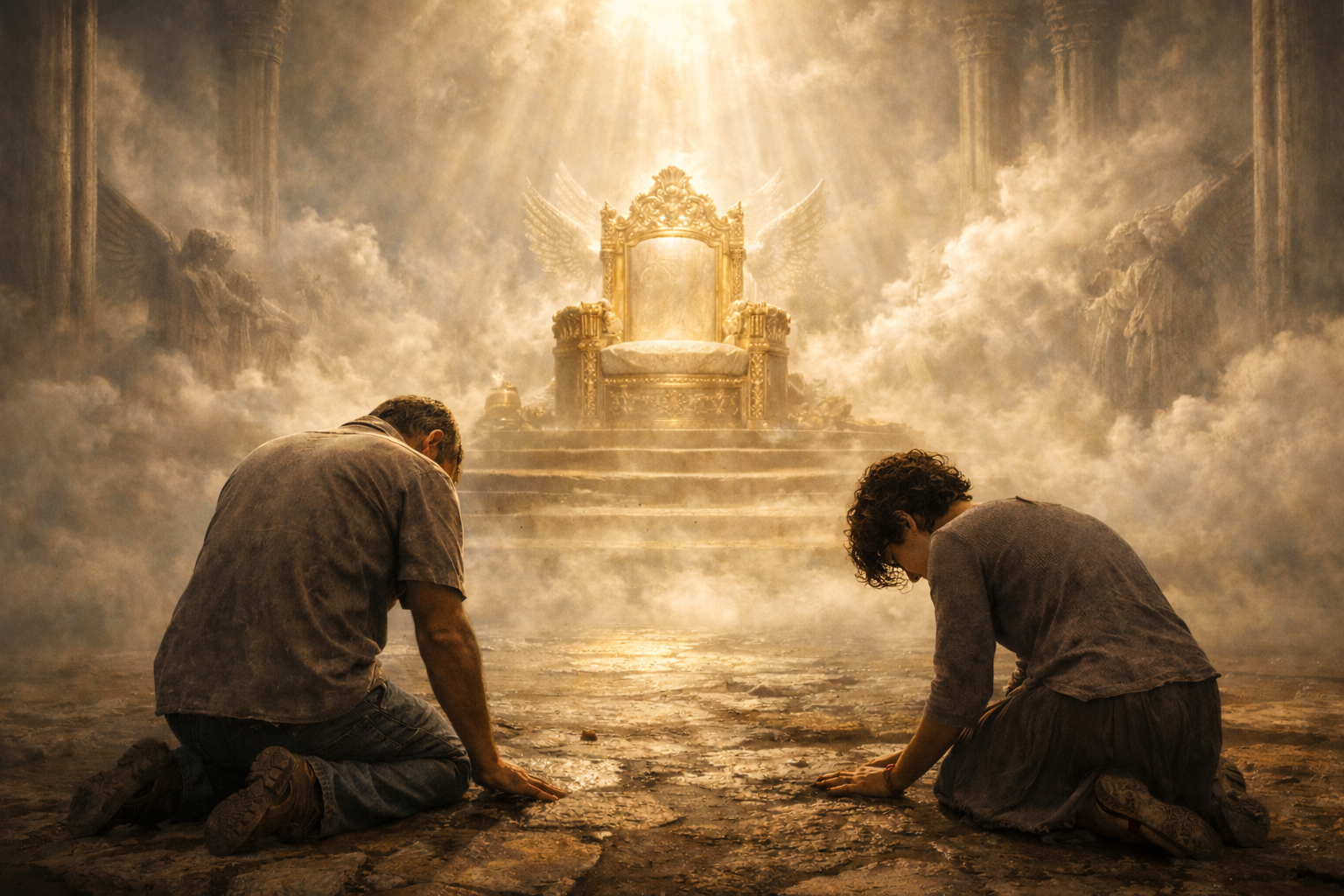
That silence didn’t invite “eat, drink, and be merry.” It invited surrender. Not as a mood, but as a posture. Not as retirement, but as consecration.
We stopped asking what to build. We started asking who we needed to become.
It forced a question that stripped away both pride and productivity:
Are we following, or are we leading and calling it faith?
And beneath that:
Are we even ready to receive what God might actually ask of us?
“I appeal to you therefore, brothers, by the mercies of God, to present your bodies as a living sacrifice, holy and acceptable to God, which is your spiritual worship.”
Romans 12:1
Not our plans.
Not our projects.
Not even our good intentions.
Our bodies, our wills, our minds, our readiness. Our concession that God’s purpose may not be to establish something He could easily accomplish without us, but to form something He will not bypass in us.
In that moment, the Spirit didn’t remove desire. He replaced it.
- The desire to decide was replaced with the willingness to wait.
- The desire to act was replaced with the discipline to stand.
- The desire to do something for God was replaced with the call to present ourselves to God.
Alive.
Unfinished.
Attentive.
This is why presenting myself has become the work before the work.
I can say, intellectually, that everything we have belongs to God. But there is still a distance between knowing that and trusting it with my body, with my pulse, my health, my instinct to protect. That distance is where formation is still happening.
Wendy sees this more clearly than I do. In this, she is ahead of me. Freer, less guarded, more willing to trust God with a future I still instinctively try to secure. Her faith exposes my hesitation not with accusation, but with contrast.
So this is where we are now.
We haven’t torn anything down.
We haven’t rushed ahead to build.
And we haven’t pretended clarity we do not yet have.
Instead, we have chosen to stand, deliberately and together, under God’s authority.
Before asking what God wants us to do with what He has given us, we are asking Him to form us to receive His answer. Especially if obedience means releasing control over outcomes I still instinctively try to manage.
And until God speaks, we intend to remain here, presented in body, mind, and will. Our shame no longer hidden. Our striving no longer defended. Our worth no longer negotiated.
Trusting that the same God who redeemed disobedience, restored what was lost, and healed what success could not will also reveal what is next, in His time, by His Spirit, and with the clarity required to follow without presumption.