Justification begins long before the cross. To grasp how anyone can be made right with God today, we must first look to the Law of Moses, where God revealed His holiness, exposed our need, and taught us what righteousness truly requires.
When the Law Speaks
The Law wasn’t just a religious code tacked onto Israel’s history. It was God’s righteous
standard, etched in stone and woven into daily life. It governed worship, work, relationships,
sexuality, justice, money, purity—everything. It revealed, beyond any doubt, that the God who
made us is holy, and to dwell with Him we must be holy too.
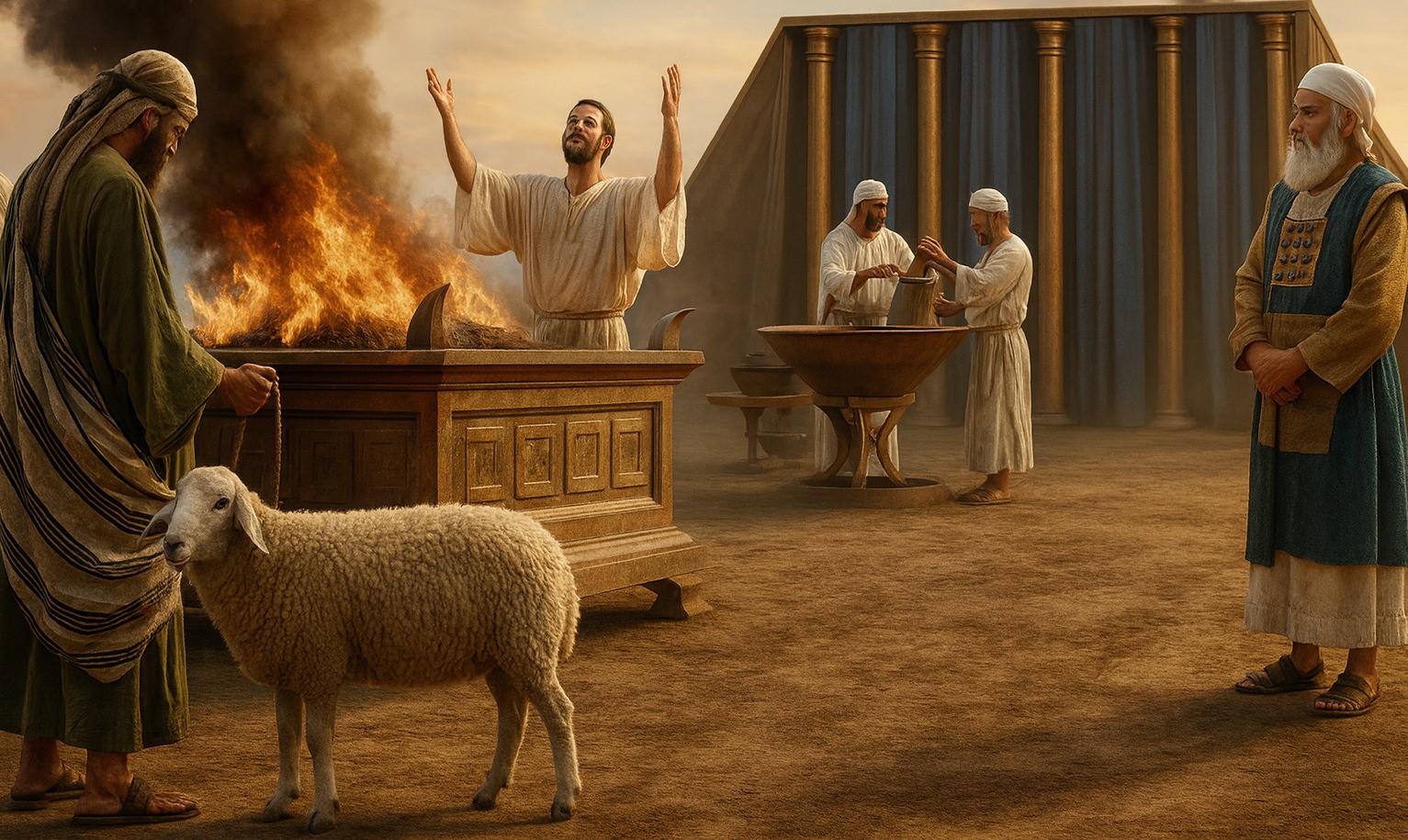
Under this covenant, justification came through flawless obedience and continual sacrifice.
Whenever someone sinned—and everyone did—an animal died in their place. Its blood covered
their guilt temporarily. But the sacrifices never stopped. Year after year, the High Priest
entered the Holy of Holies because sin kept creeping in despite the best efforts of the people. The Law demanded absolute perfection; something fallen hearts and corrupt spirits could not sustain.
The Law was an X-ray, not a cure. It diagnosed the cancer but offered no power to heal the heart. Paul says the Law was our “schoolmaster” or guardian, appointed to lead us to Christ (Galatians 3:24–25). In other words, it was never meant to be a ladder we climb to reach God, but a teacher that proves we can’t. When we keep failing under it, that isn’t a glitch in the system—that is the system doing its job. It drives honest people to the end of themselves so they’ll finally look up and see their need for a Savior.
The Witness of the Old Testament
Scripture reinforces the weight and purpose of God’s Law. Again and again, the Old Testament
shows us that the commandments were given to reveal God’s holiness, expose our sin, and
demonstrate our need for a Savior.
Highlights from the Law and the Prophets:
Exodus 20:1–17 — God’s moral standard revealed in the Ten Commandments.
Leviticus 18:27 — A detailed picture of the holy boundaries God set for His people.
Deuteronomy 27:26 — A clear warning that failing to obey the Law brings curse, not blessing.
Deuteronomy 4:26 — A sober reminder that rebellion leads to judgment and loss.
Other passages reinforce the seriousness of the Law:
Joshua 1:7–8 — Joshua is instructed to meditate on the Law “day and night.”
Isaiah 42:21 — God magnifies the Law to reveal His righteousness.
Malachi 4:4 — At the close of the Old Testament, Israel is urged once again to remember the Law of Moses.
None of this was accidental. The Law revealed our helplessness. It showed that if salvation
depended on our performance, none of us would survive. It brought humanity to the end of itself,
setting the stage for a better covenant—with a better sacrifice.
Justification Via Faith
At the perfect time, the story turned. The promised Savior stepped into His own creation.
Jesus Christ—God in human flesh—did what no child of Adam ever could. He lived in flawless
obedience to God’s Law, fulfilling it in every detail. And then, in an act of unimaginable
grace, He offered Himself as the final, perfect sacrifice for sin.
The End of the Old, the Birth of the New
Jesus’ death was not symbolic or tragic—it was substitutionary. The spotless Lamb of God
stood in the sinner’s place, bearing guilt, wrath, and shame so we could go free. His blood
didn’t merely cover sin; it removed it. His resurrection proved that the debt was paid in full.
The New Testament affirms this again and again:
Matthew 5:17 — Jesus makes clear He came not to abolish the Law but to fulfill it completely.
Romans 10:4 — Christ is the end (goal and completion) of the Law for righteousness.
Galatians 3:24–25 — The Law served as our “schoolmaster,” showing us our sin and leading us to Christ.
Hebrews 8:13 — A new covenant replaces the Mosaic one: salvation by grace through faith in Christ’s finished work.
Other passages deepen the picture:
Colossians 2:14–15 — Our record of debt, with its legal demands, is nailed to the cross.
Ephesians 2:15 — Christ tears down the dividing wall and creates one new humanity.
Titus 2:14 — Jesus redeems and purifies a people eager for good works.
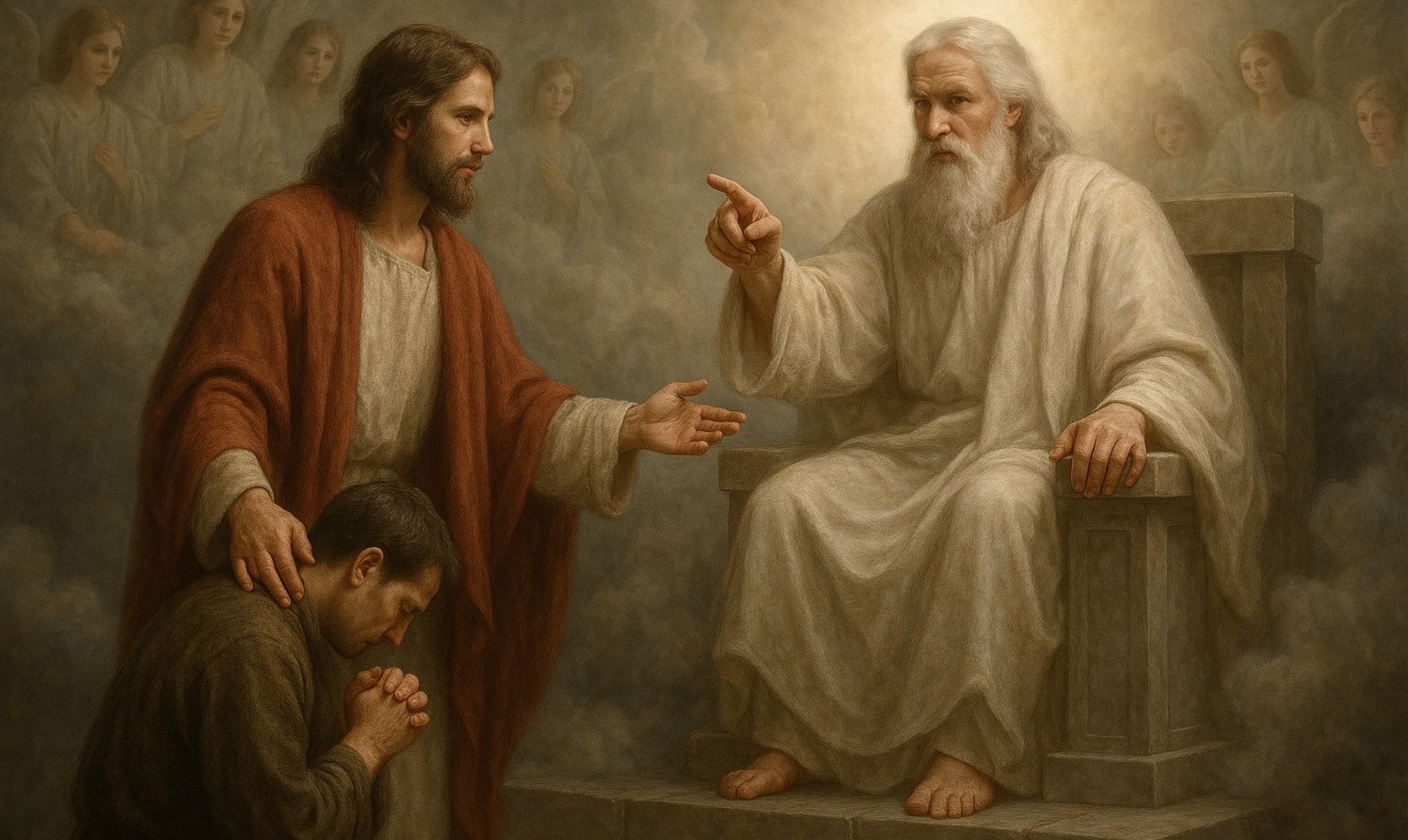
Through Christ, righteousness is no longer a ladder we climb or a church treadmill we try to survive, but a gift we receive. Jew or Gentile, moral or broken, seeker or prodigal—the invitation is the same. The door stands open. Grace meets the heart that comes broken and honest, the way David describes in Psalm 51:17—a spirit crushed enough to finally stop pretending and fall into the mercy of God.
More Than a Legal Stamp
When God justifies a person, He does more than erase their past. He gives them a new identity.
The justified believer doesn’t walk around wondering whether they measure up. God Himself has
already declared them forgiven, cleansed, and adopted.
But justification is only the beginning. Jesus didn’t call us to pray a prayer and move on.
He called us to follow Him—denying ourselves, taking up our cross daily, and walking in the
freedom He purchased for us (Luke 9:23). A justified life is a surrendered life.
This is why confession matters. When we drag our hidden sins into the light, grace meets us
there. Open confession kills pride, breaks cycles of secrecy, and leads to real spiritual
healing. It is not a rival to grace—it is one of grace’s sharpest tools.
If you haven't already, the teachings on
Confession and
Sanctification will help you see how justification
sets the stage for ongoing cleansing and transformation. God doesn’t justify us and then walk
away—He walks with us and shapes us.
Justification is God’s thunderous declaration that sinners are made righteous because of the
finished work of Christ. And from that place of security, we learn to live honestly, humbly,
and boldly—becoming, step by step, what God has already declared us to be.